| Power Classification | 3MT |
| Introduced | 1930 – 1948 |
| Designer | Collett |
| Company | GWR |
| Weight – Loco | 43t 8cwt |
| Tender | 36t 5cwt |
| Driving Wheels | 5ft 2ins |
| Boiler Pressure | 200psi |
| Cylinders | Inside – 17.5in x 24in |
| Tractive Effort | 20,155lbf |
| Valve Gear | Stephenson (slide valve) |
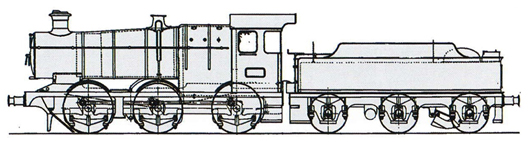
The 2251 class were the last design of 0-6-0 tender engines to be built in Britain and had fairly large driving wheels at 5’2″, sharing a boiler with the 9400 heavy pannier tank locomotives being built in the 1940s.
 |
2251 class |
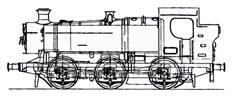 |
9400 class |
These locomotives were designed for mixed traffic work to replace the Armstrong and Dean Goods engines which had carried the brunt of the work on the light absorbed lines in Central Wales. The 2251 class were used particularly on the steeply graded branch lines in Central and North Wales where their relatively high tractive effort, for a smaller engine, made them capable of good acceleration.
The 120 built were very similar to the Dean Goods 2301 class in frames, wheels and motion but they were fitted with a short tapered boiler with no dome. They had large side window cabs and could work over almost all the system. They were frequently used on passenger duties and were lively engines with a good turn of speed. 3218 was the first locomotive to be built at Swindon under the new BR ownership in 1948.
 |
2251 class |
 |
2301 class Dean Goods |
Some of the class were fitted with large tenders from withdrawn ROD locomotives whilst the majority had the smaller Churchward or Collett tenders.
2211 – 2240 were built during the war in 1940 – 1944 and were fitted without side cab windows to assist with the black-out regulations. They were later rebuilt with normal side cab windows.
|
Built |
Withdrawn |
No in Service |
||
| 1930 | 2251 – 70 | 20 | 20 | |
| 1934 | 2271 -80 | 10 | 30 | |
| 1936 | 2281 – 90 | 10 | 40 | |
| 1938 | 2291 – 99 | 9 | 49 | |
| 1938 | 2200 | 1 | 50 | |
| 1939 | 2201 – 10 | 10 | 60 | |
| 1940 | 2211 – 30 | 20 | 80 | |
| 1944 | 2231 – 40 | 10 | 90 | |
| 1945 | 2241 – 50 | 10 | 100 | |
| 1946 | 3200 – 9 | 10 | 110 | |
| 1947 | 3210 – 17 | 8 | 118 | |
| 1948 | 3218 – 19 | 2 | 120 | |
| 1949 – 57 | 120 | |||
| 1958 | 1 | 119 | ||
| 1959 | 27 | 92 | ||
| 1960 | 10 | 82 | ||
| 1961 | 9 | 73 | ||
| 1962 | 20 | 53 | ||
| 1963 | 19 | 34 | ||
| 1964 | 19 | 15 | ||
| 1965 | 15 | |||
Withdrawals began in December 1958 when 2258 was taken out of service at Swindon having been in store there for a few months previously. The last 15 to be withdrawn were taken out of service in 1965 with the last being 2210 in June of that year. At the time the locomotive was based at Banbury which was a London Midland Region depot.
| Banbury | 1 |
| Exemouth Junction | 1 |
| Gloucester | 2 |
| Machynlleth | 3 |
| Severn Tunnel | 1 |
| Templecombe | 4 |
| Worcester | 3 |
| 15 |
Back to GWR
Back to Locomotives
 Preserved British Steam Locomotives