| Weight | 166tons 6cwt |
| Driving Wheels | 4ft 9ins |
| Boiler Pressure | 200psi |
| Cylinders | Outside 22in x 28in |
| Tractive Effort | 40,418lbf |
| Valve Gear | Walschaert |
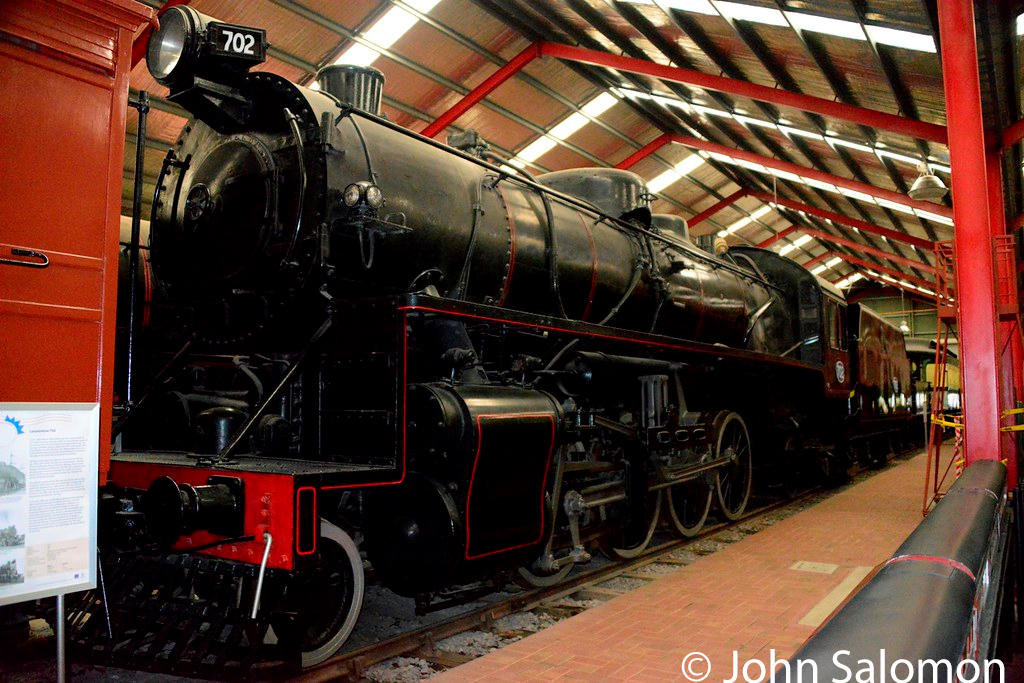
This locomotive was one of the larger engines supplied to the South Australian Railway (SAR) from 1926 which revolutionised the rail haulage in a state previously characterised by UK built small locomotives which were often required to double head trains.
The 700 class were designed by F J Shea who was the Chief Mechanical Engineer of the SAR. They were built to operate over all of the broad gauge (5ft 3in) lines of the SAR. They were successful in operation as they had a lower axle load than other large locomotives.
The ten locomotives of the 700 class were built by Armstrong Whitworth in Newcastle upon Tyne in 1925. Three years later a further ten locomotives were built at the Islington Railway Workshops which were virtually identical to the 700 class but became the 710 class.
When there was a shortage of coal during the Second World War some locomotives were converted to burning oil but were converted back to coal fired later.
The first two 700 class locomotives were withdrawn from service in June 1959 and the rest being withdrawn as they were replaced by diesel power. The last withdrawal (700) took place in June 1968.
702 was withdrawn from service in July 1964 after covering 775,526 miles whilst in service. It was then placed in the Mile End Railway Museum in June 1965.
The Mile End Railway Museum was superseded by the Port Dock Station Museum at Port Adelaide in 1988 and the locomotive was moved there in that year. The Port Dock Station Museum subsequently became the National Railway Museum.
The locomotive remains on static display at the National Railway Museum.
Back to Preserved Outside Britain – By Country
Back to Preserved Outside Britain – By Builder
Back to Preserved Outside Britain – Australia
served Outside Britain – By Country
 Preserved British Steam Locomotives