| Introduced | 1877 – 1882 |
| Driving Wheels | 5ft 6ins |
| Boiler Pressure | 130psi but 140psi later |
| Cylinders | Outside – 18in x 24in |
This locomotive was built by Beyer Peacock in 1878 for the New South Wales Government Railway in Australia. 30 were supplied by Beyer Peacock between 1877 and 1879 and a further four in 1881. 26 were built by Dübs and Company during 1880 and 1881 and 8 were built in Australia by the Atlas Engineering Works situated in Sydney and delivered in 1881 and 1882. In total 68 locomotives were supplied.
The locomotive design is a development of the London Metropolitan Railway class A 4-4-0T locomotive built by Beyer Peacock and first used in 1864. One of these locomotives (Metropolitan Railway No 23) is preserved in Britain at the London Transport Museum.
The first batch of locomotives supplied by Beyer Peacock were placed in service as class 79 locomotives. They were the first locomotives to be imported with Westinghouse continuous air-brakes already fitted.
They were employed hauling express passenger and mail trains.
In 1895 one of the class was converted to a 4-4-2T tank engine for use on the Sydney suburban services. In 1902 a further 19 were converted to 4-4-2T tank engines and became CC79 class locomotives. The remaining 4-4-2 tender engines were then classed as C80.
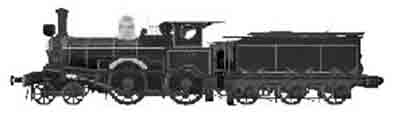
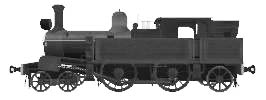
With the arrival of newer locomotives the class C80 engines were relegated to hauling secondary and later branch line services radiating out of Dubbo, Werris Creek, Narrabri and Moree, where some were equipped with cowcatchers for operation on unfenced lines.
In May 1914 the locomotive hauled the first train into Camberra
In 1924 the locomotive class was changed to Z12 and at the same time the number the locomotive carried was changed from 120 to 1210.
The first members of the class were withdrawn from service in 1957.
In 1959 as part of the centenary of rail operations in New South Wales 1210 and classmate 1243 hauled vintage trains across the state of New South Wales.
In January 1962 the pair hauled a special service to Canberra where 1210 was placed on display on a plinth outside Canberra railway station.
The Canberra Railway Museum restored the locomotive to steam over four years so that it steamed again in 1988 for the Australian Bicentennial celebrations.
Beyer Peacock Works number 33 built in 1856 ran last in 1981 so that in 1988 number 1210 was the oldest operating steam locomotive in the world. The oldest in Britain was built by Sharp Stewart & Co (Works number 1448) for the Furness Railway seven years later than this engine.
When undergoing mechanical and boiler works in 2017 thieves broke in and stole a number of parts of the locomotive and it is unlikely it will ever steam again.
The locomotive is now on static display at the Canberra Railway Museum.
There are five other members of the original 68 delivered preserved.
Two other class Z12 locomotives were preserved
- 1219 built in 1879 by Dübs and Company as works number 1270
- 1243 built in 1882 by Atlas Engineering Company in Australia
Three are preserved as rebuilt Z13 locomotives
- 1301 built by Beyer Peacock in 1877 as works number 1624
- 1307 built by Beyer Peacock in 1877 as works number 1637
- 1308 built by Beyer Peacock in 1877 as works number 1620
ed Outside Britain – By Country
 Preserved British Steam Locomotives