| Weight – Locomotive | 63t 0cwt |
| Tender | 42t 4cwt |
| Driving Wheels | 4ft 3ins |
| Boiler Pressure | 160psi |
| Cylinders | Outside – 21in x 26in |
| Tractive Effort | 30,576lbf |
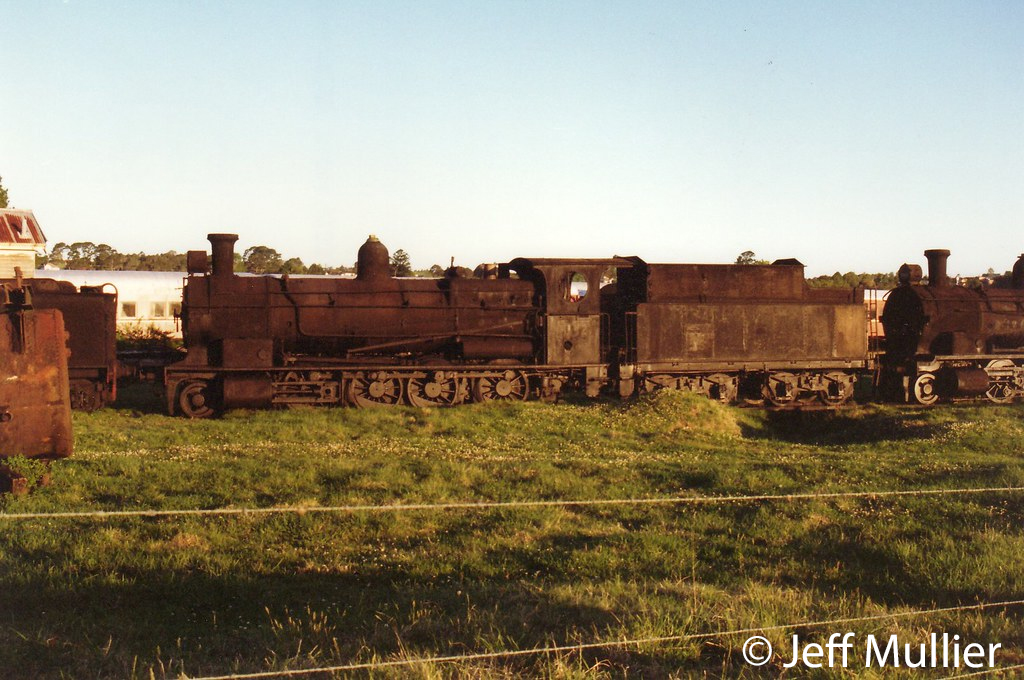
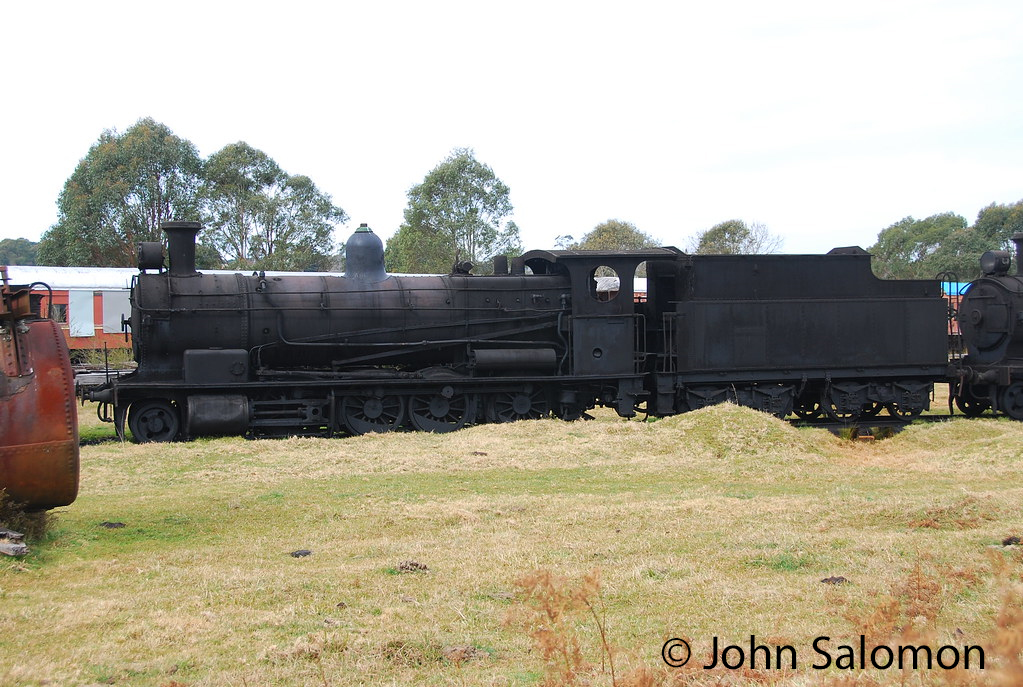
This locomotive was built in 1909 by Beyer Peacock in Manchester for the New South Wales Government Railway (NSWGR).
This very successful type was one of the three standard classes designed by NSWGR Chief Mechanical Engineer William Thow in conjunction with Beyer Peacock & Co. The choice of wheel configuration followed earlier NSWGR experience with 2-8-0 locomotives built by Baldwin in the USA for heavy freight duties. The 2-8-0 wheel arrangement had been developed by Baldwin for heavily-graded mountain railways in Colorado.
The T(524) class which the engine became part of were the most numerous class of locomotives in Australia with 280 being delivered to the NSWGR between 1896 and 1916. Of the 280 151 were built by Beyer Peacock, 84 by the North British Locomotive Company 10 by Neilson & Co, 5 by Dübs & Co and 30 by Clyde Engineering in Australia.
The T(524) class were reclassified as D50 in the NSWGR renumbering scheme of 1924.
The final 75 locomotives delivered were fitted with superheaters as part of the developments made over the delivery period. Many of the earlier saturated engine were progressively converted to superheating and these could be easily identified by their extended smokeboxes. Works number 5074 was fitted with a superheater in 1942.
10 superheated locomotives built by the North British Locomotive Company never made it to Australia as they were requisitioned by the British Army’s Royal Engineers Railway Operating Division (ROD) for service in Europe during the First World War and most ended up in Belgium.
This followed a period where the locomotive had been out of service for a number of years. This was due to the Great Depression in 1931 which saw a significant reduction in the volume of traffic on the NSWGR and resulted in the locomotive being withdrawn from service. It was then one of 88 locomotives used to load test the Sydney Harbour Bridge before it opened in 1932.
In September 1939 the locomotive was condemned and earmarked for scrapping but then received a reprieve and was returned to traffic in September 1942 after being fitted with a superheater.
By the middle of 1964 only 113 of the 280 remained in service and they were normally restricted to hauling coal trains in the Hunter Valley and shunting duties at larger marshalling yards.
The locomotive was withdrawn from service in in December 1972 whilst based at Port Waratah. It was then stored along with the final remaining steam locomotives on the NSWGR at Enfield. It was saved for preservation when it was purchased for the collection of the proposed Hunter Valley Steam Railway & Museum.
The HVSR&M changed its focus to reopening the Dorrigo branch line on the New South. Wales north coast. As a result the locomotive was moved by rail to Glenreagh in 1983. It was then one of the two locomotives that operated the inaugural train to Dorrigo in 1986.
The locomotive is now at the Dorrigo Steam Railway & Museum where it is the only preserved member of the class to have been fitted with a superheater. It is appropriate that the locomotive should be at Dorrigo as it regularly worked on the branch line there in 1926.
Two other members of the class built by Beyer Peacock are preserved. 5069 – Works number 4374 built in 1902
- 5112 – Works number 5054 built in 1908
There is also one other locomotive preserved which was built by Clyde Engineering in Australia.
- 5096 – Works number 1 built in 1907
 Preserved British Steam Locomotives