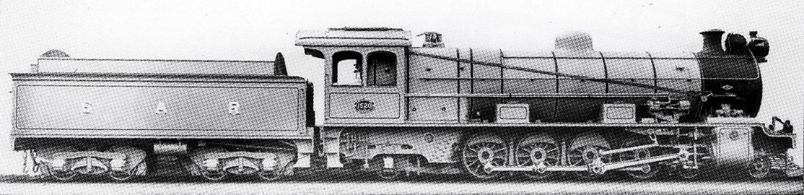
| Weight | Locomotive – 99t Tender – 51t – 66t |
| Driving Wheels | 4ft 3ins |
| Boiler Pressure | 190psi superheated |
| Cylinders | Outside – 24in x 26in |
| Tractive Effort | 41,840lbf |
| Valve Gear | Walschaert |
The details above relate to class 12A locomotives. Three classes of engine were at some time classed as 12A. 46 locomotives built as class 12 and 30 as class 12B but were later converted to 12A engines. In addition, 75 were built as class 12A locomotives.
Locomotives Built as Class 12 Engines 1494-1519 & 1859-1878
In 1910 design work commenced for a new heavy goods engine for use on the heavy coal service between Witbank and Germiston. The resulting Class 12 was the first locomotive design to originate from the newly established South African Railways (SAR) in 1912.
It was, in effect, an enlarged version of the already successful class 3B which had also been designed by SAR Chief Mechanical Engineer (CME) D.A. Hendrie during his years on the Natal Government Railways.
Orders for the first eight locomotives from the North British Locomotive Company (NBL) were placed in March 1911. The locomotives entered service numbered 1494-1501 in the following year.
Further orders for eighteen locomotives from the NBL followed in 1913 (1502-1509) and 1915 (1510-1519).
In June 1921, Beyer, Peacock and Company (BP) delivered the final twenty class 12 locomotives and numbered in the range from 1859 to 1878.
When the locomotives were introduced, they were the largest non-articulated engines in South Africa and possibly in the world on railways of less than 4ft 8½in gauge.
By 1934 all 46 class 12 locomotives had been rebuilt with a standard boiler type designed by then CME A.G. Watson as part of his standardisation policy. At the same time the locomotives were fitted with Watson cabs with their distinctive slanted fronts to facilitate access to the firebox side stays. In the case of the NBL-built locomotives, the reboilered engines were also fitted with running boards which continued straight through underneath their cabs. The locomotives were then reclassified as class 12R engines.
The locomotives gave outstanding performance with low maintenance costs. They proved to be most successful in the service they had been designed for, handling loads of 1,400 tons and doing the return trip between Witbank and Germiston in one day.
They were also used around Ladysmith in Natal. In the 1940s, the Natal locomotives were relocated to the Orange Free State, where some were allocated to Bloemfontein and at Bethlehem, all in shunting service. The Transvaal had a large contingent stationed at Springs, Germiston and Krugersdorp, also mainly used for shunting.
By the 1950s, some were allocated to the Cape Midland system, stationed at Sydenham in Port Elizabeth. Until 1957 they worked the mainline section to Cradock. Even though they were subsequently allocated to dock shunting and yard work in the New Brighton marshalling yards, they still assisted with mainline work when required and were comfortable at 60 miles per hour when employed in tandem with the larger locomotive.
Towards the end of the 1950s they were employed as carriage-yard pilots at Bloemfontein. Although they had been drafted in for these old-age duties, the phenomenal growth in traffic during the 1960s had the result that the class 12R engines were also frequently used for road jobs on the Kroonstad as well as the Bethlehem-Harrismith mainlines.
Ten class 12R locomotives were briefly hired to the Zambian Railways during a peak in that country’s perpetual diesel motive power crisis in 1980, but were soon returned since the Zambian knowledge base on steam maintenance had virtually disappeared by then.
Few class 12 locomotives ended up in industrial service despite their evident suitability for such work. Only five were sold into private service.
- NBL-built no. 1510 went to Umgala Colliery at Utrecht as no. 7.
- NBL-built no. 1511 went to Middelplaas Manganese as no. SL001.
- NBL-built no. 1515 went first to Tweefontein Colliery and later to Witbank Consolidated Coal Mine.
- BP-built no. 1863 and 1864 went to Middelplaas Manganese as numbers SL002 and SL003 respectively.
Locomotives Built as Class 12A Engines 1520-1550 & 2103-2138
The class 12A locomotive was the final design produced by D.A. Hendrie who was the Chief Mechanical Engineer of the South African Railways (SAR.). It was an improved and larger version of his class 12 locomotive, with larger diameter cylinders to increase tractive effort and a redesigned boiler.
Between 1919 and 1929 67 class 12A locomotives were built to full fill five orders. 48 were built by the North British Locomotive Company (NBL) in Glasgow and 19 by Henschel and Son in Kassel, Germany.
The first twenty were built by the NBL and were delivered in 1919 and numbered in the range from 1520 to 1539.
These were followed by another fifteen from NBL, which were built in late 1919 but were only delivered in 1921, numbered in the range from 2111 to 2125.
The Henschel-built locomotives only arrived several years later. Six were delivered in 1928 and numbered in the range from 1540 to 1545.
Another thirteen were delivered by Henschel in 1929, numbered in the ranges from 1546 to 1550 and 2103 to 2110, filling the gaps in the numbering sequence.
The final thirteen were built by NBL and were also delivered in 1929 and numbered in the range from 2126 to 2138.
Between 1947 and 1953 eight locomotives were built to the same design but were ordered for industrial use from the NBL. These locomotives were not fitted with superheaters. Most of these appear to have been employed on the Whitbank coal field where they were replaced by diesel power around 1986.
When they were introduced the locomotives were of the maximum size permissible for the Mountain type on Cape gauge. They were designed primarily to supplement the class 12 locomotives which were already working on the coal line between Witbank and Germiston. Since class 12A engines had a slightly heavier axle load than the predecessor it was anticipated that they would be able to take a slightly increased load on the Witbank-Germiston section.
The boilers of the first two batches of 1919 and 1921 were equipped with Ramsbottom safety valves whilst later locomotives were fitted with Ross pop safety valves.
The first two batches were equipped with the Johnston link-and-pin couplers which had been in use since the establishment of the Cape Government Railways in 1873. By the time the third batch arrived in 1928, the SAR had begun to convert its Cape Gauge rolling stock to AAR knuckle couplers. The third to fifth batches were therefore delivered with the new coupling system.
The locomotives were delivered new with two tender types, the MP1 and MT. While sources are unclear about which batches of the locomotives were delivered with which tender type, builder’s works photographs show the NBL-built locomotives of 1919 and 1921 with type MP1 tenders, and the Henschel-built and subsequent NBL-built locomotives with type MT tenders.
During the 1930s, many locomotives were reboilered with a standard boiler type designed by then CME A G Watson. At the same time they were equipped with Watson cabs with their distinctive slanted fronts and a longer smokebox. The locomotives rebuilt in this way were then reclassified as class 12AR.
The reboilered locomotives were considered by some enginemen to be inferior steamers compared to the as-built engines.
The locomotives entered service when new service hauling coal on the section from Witbank to Germiston.
The unreboilered locomotives spent a large part of their working lives in Transvaal, mainly in Western Transvaal and shedded at Springs and Germiston, a few in Eastern Transvaal and shedded at Nelspruit and Waterval Boven, and one at De Aar in the Cape Province. The class also served in Natal during the late 1920s. Here they were worth two more coaches than a class 14 on the 1921 mainline between Durban and Pietermaritzburg.
A class 12A locomotive hauled the last steam-hauled mainline passenger train to depart from Durban station after electric traction reached Durban from Pietermaritzburg during 1936. In 1977, all the remaining class 12A locomotives were relocated to the Cape Northern system for shunting at De Aar and at Beaconsfield in Kimberley.
The more numerous reboilered class 12AR locomotives worked throughout most parts of South Africa, being shedded at Kimberley, De Aar, Port Elizabeth and East London in the Cape Province, Glencoe and Newcastle in Natal, Klerksdorp in Transvaal and Kroonstad in the Orange Free State. East London and Port Elizabeth each received four for use on the fast Saturday morning passenger trains to Cape Town.
Both the original locomotives and those rebuilt proved to be very successful engines which performed well, with low repair costs. Modifications in design of details after entering service were negligible.
The locomotives were withdrawn from service during the 1980s.
Locomotives Built as Class 12B Engines 1931 – 1960
In 1920 thirty class 12B locomotives built at Baldwin Locomotive Works in the United States of America entered service with the SAR. The locomotives were built to the same design as the class 12 locomotives and most were erected in the SAR workshops. A few were erected by James Brown and Company in Durban.
All thirty class 12B locomotives were eventually reboilered with Watson Standard no. 2 boilers. In the process, they were also equipped with Watson cabs with their distinctive slanted fronts, compared to the conventional vertical fronts of their original cabs. Upon reboilering, the unknown original reason for the separate classification was ignored and instead of becoming class 12BR, the reboilered locomotives were reclassified to class 12R along with the reboilered class 12 locomotives.
Preservation
Five class 12R locomotives have been preserved. One was built at the Baldwin Locomotive Works in the United States of America and entered service as SAR 1947.
Beyer, Peacock & Company Works No 5994 – SAR 1865
North British Locomotive Company Works No 20176 – SAR 1505
North British Locomotive Company Works No 20812 – SAR 1510
North British Locomotive Company Works No 21753 – SAR 1535
North British Locomotive Company Works No 22751 – SAR 2111
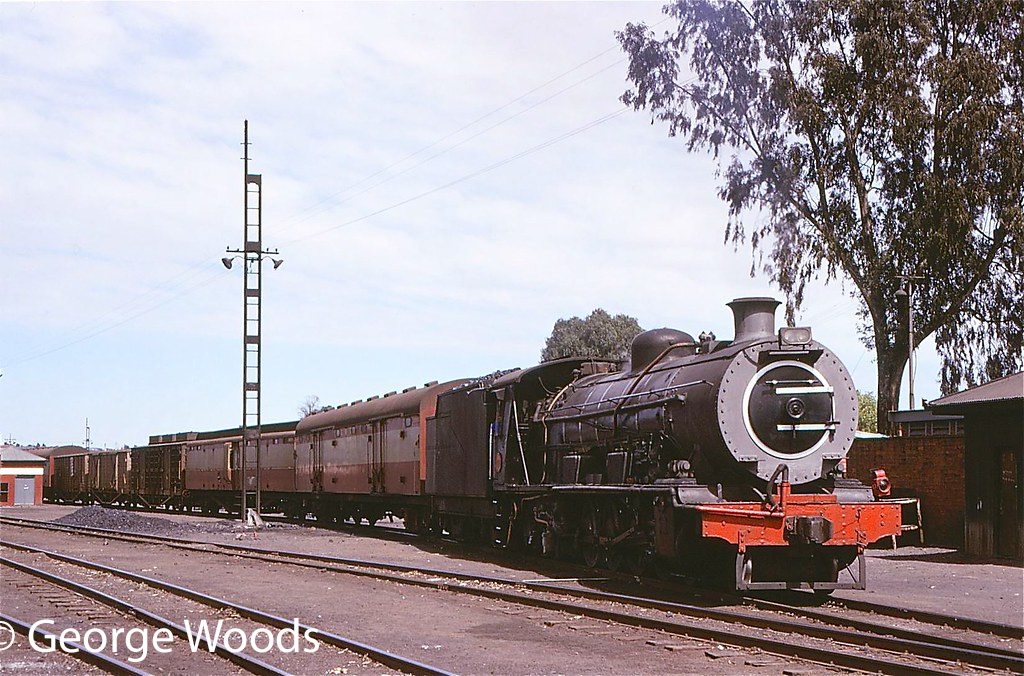
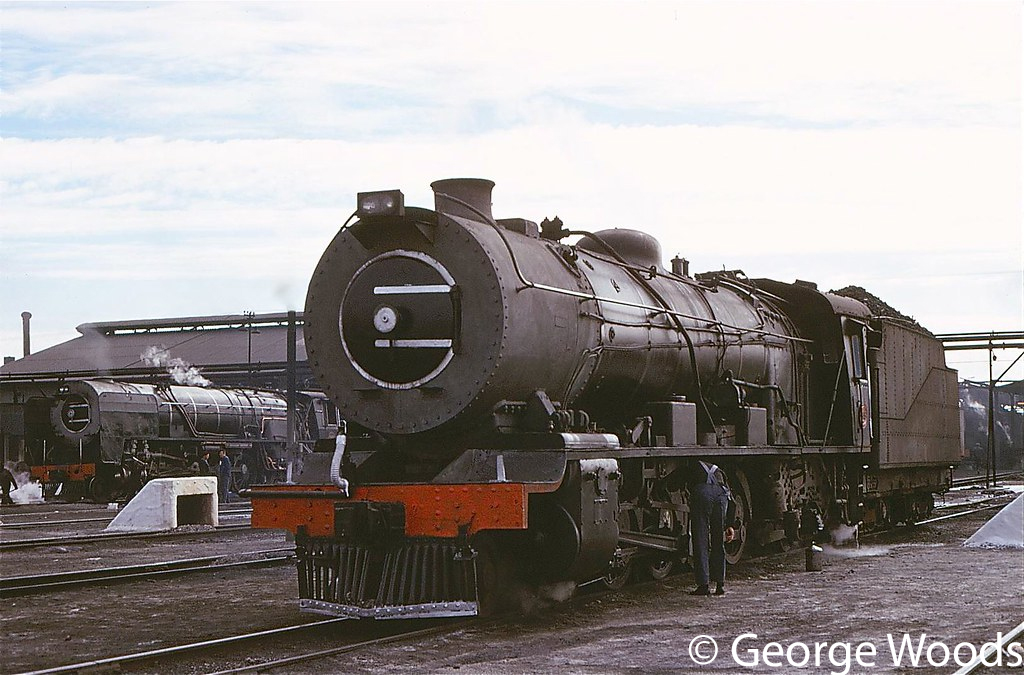
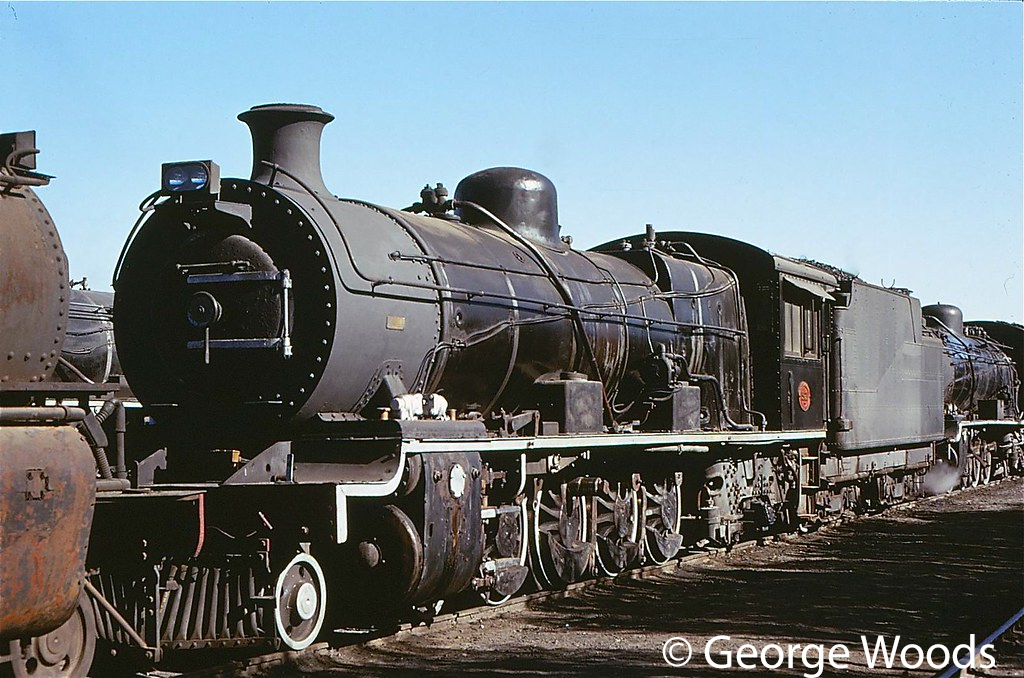
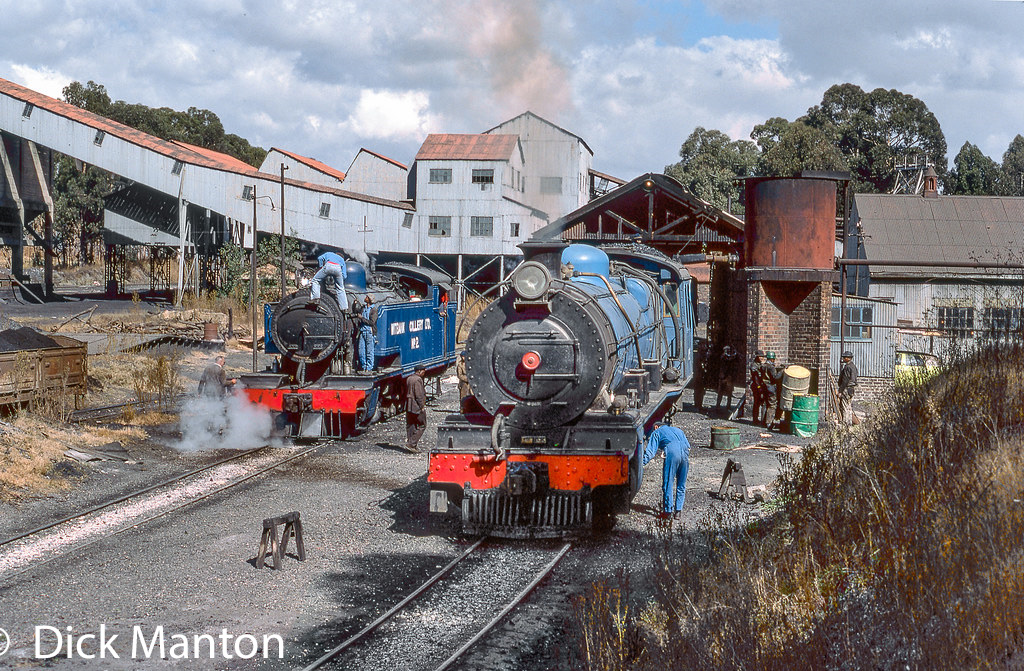

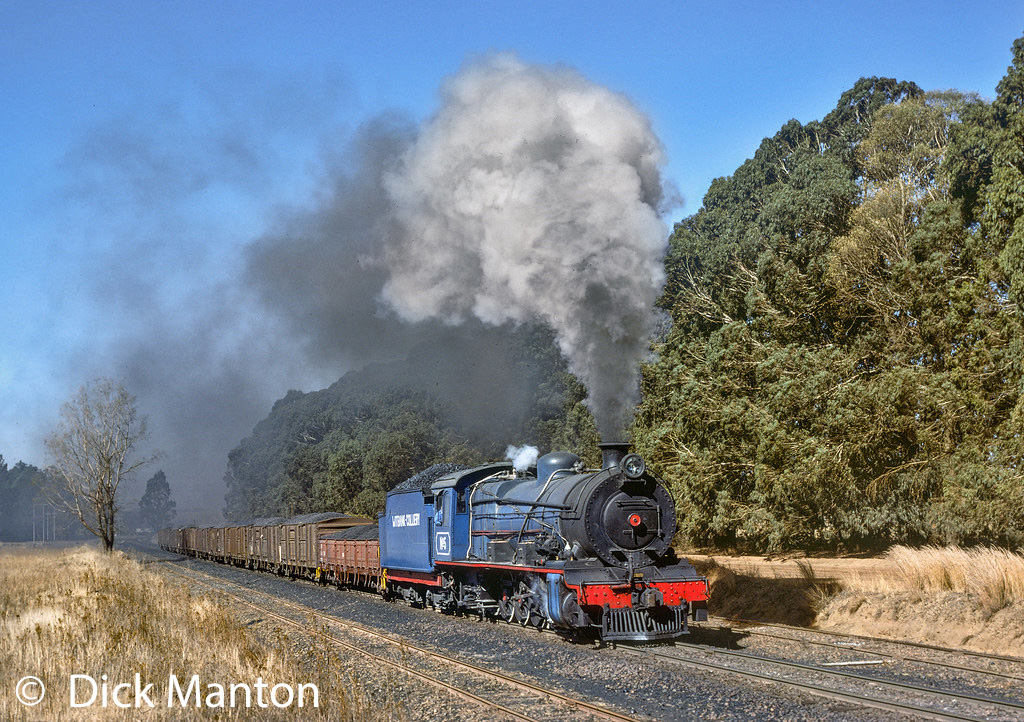
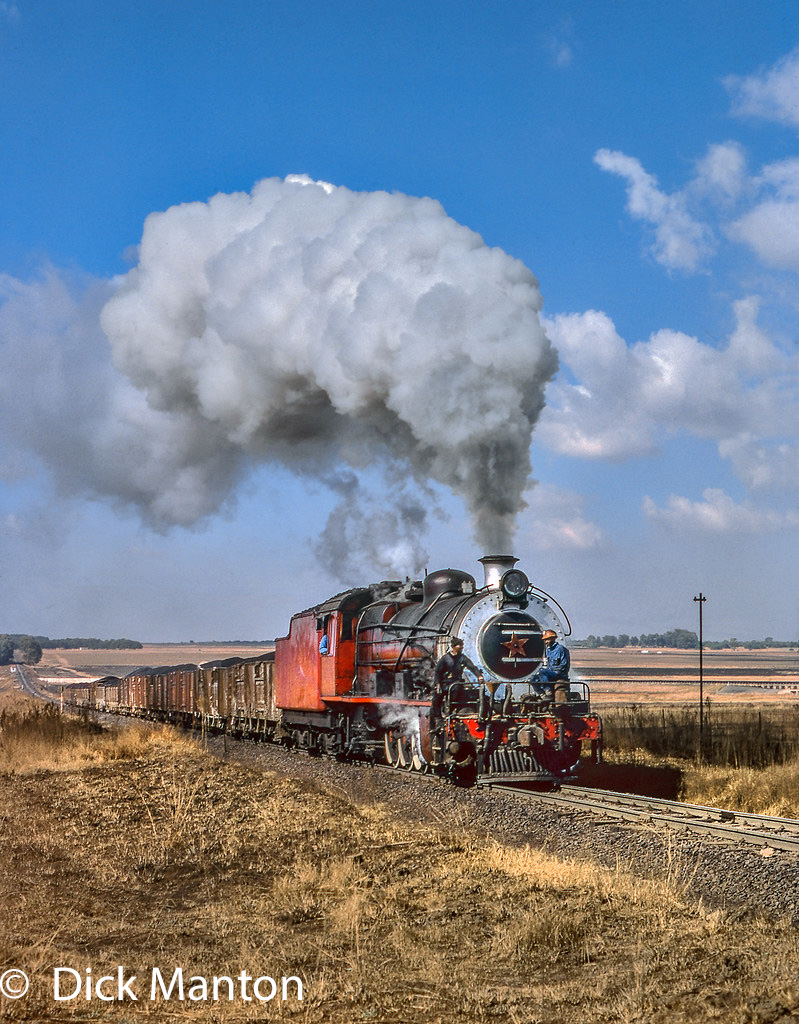
shared with Witbank Colliery in June 1976.
Back to Preserved Outside Britain – By Country
 Preserved British Steam Locomotives