| Weight | Locomotive – 108t – 113t Tender – 69t – 107t |
| Driving Wheels | 5ft 0ins |
| Boiler Pressure | 210psi |
| Cylinders | Outside – 24in x 28in |
| Tractive Effort | 42,340lbf |
| Valve Gear | Walschaert |
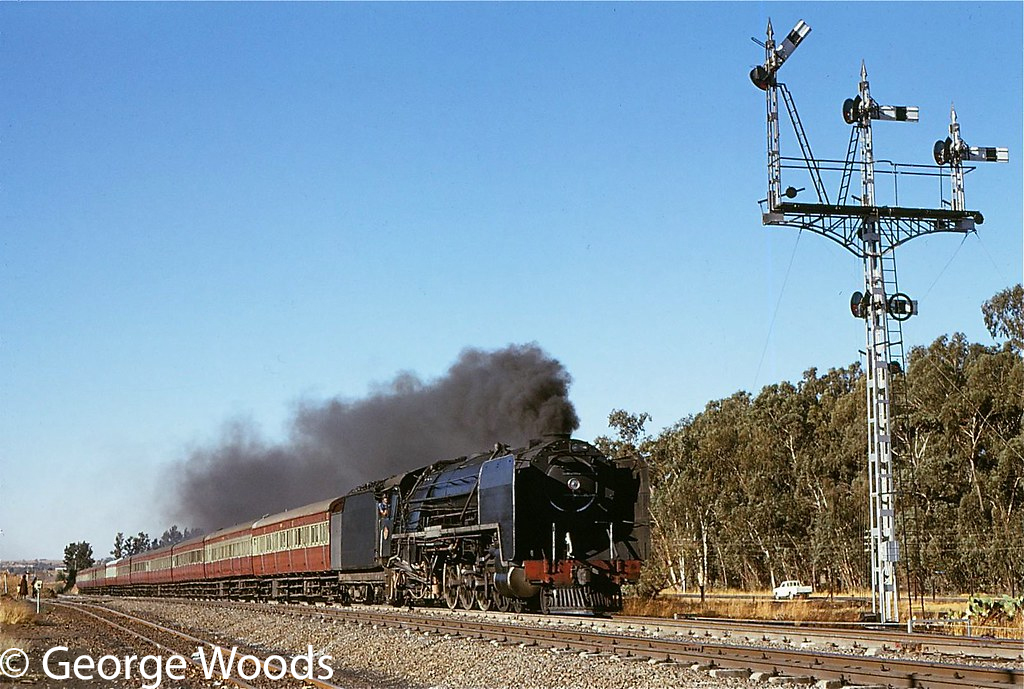
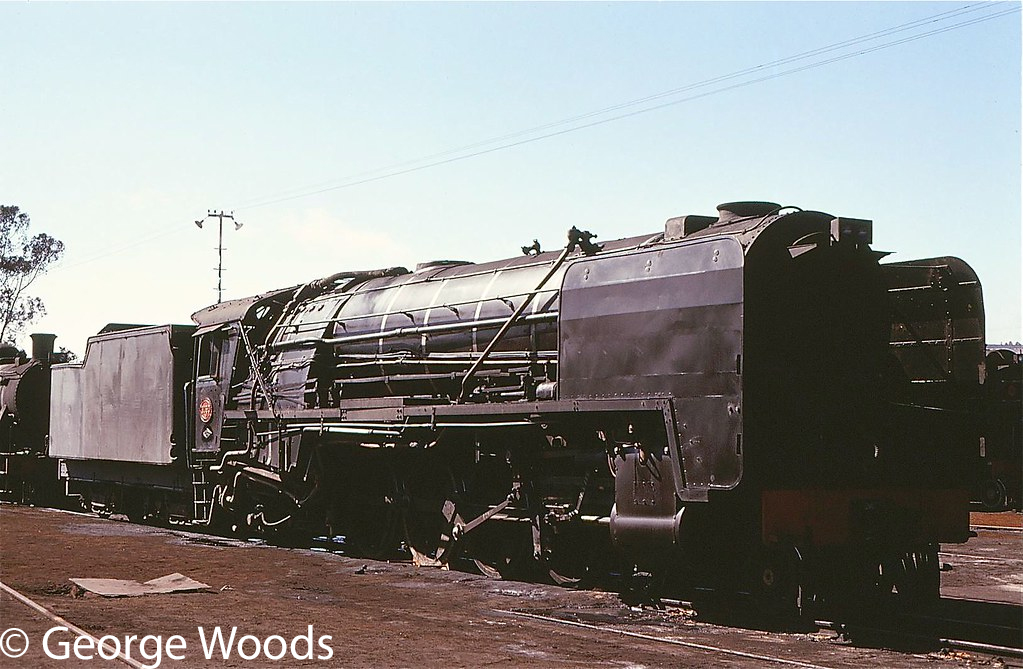
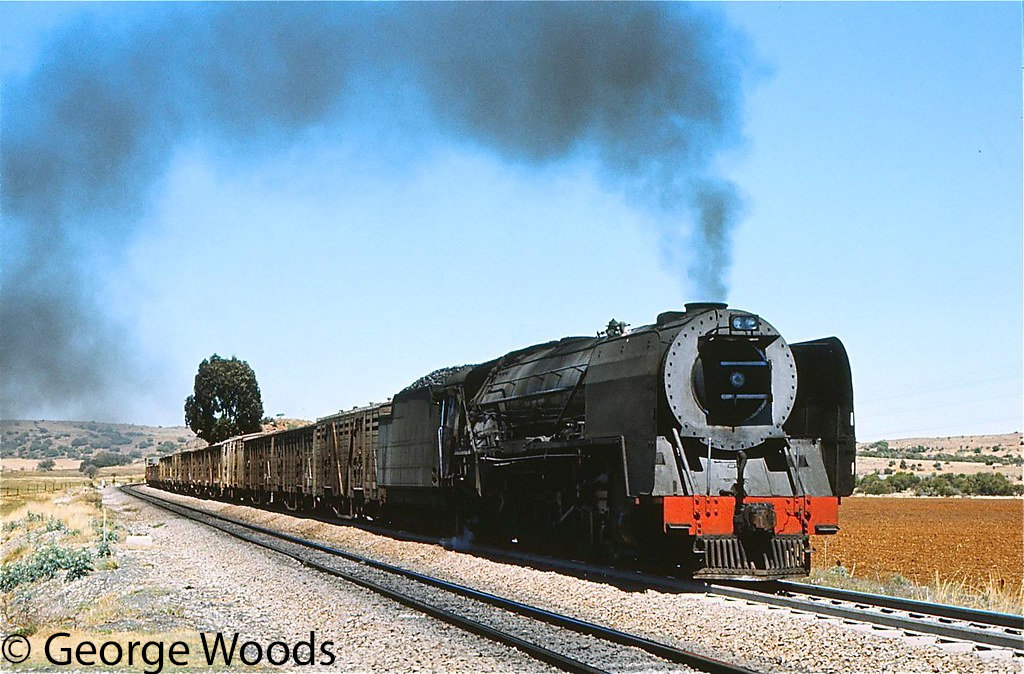
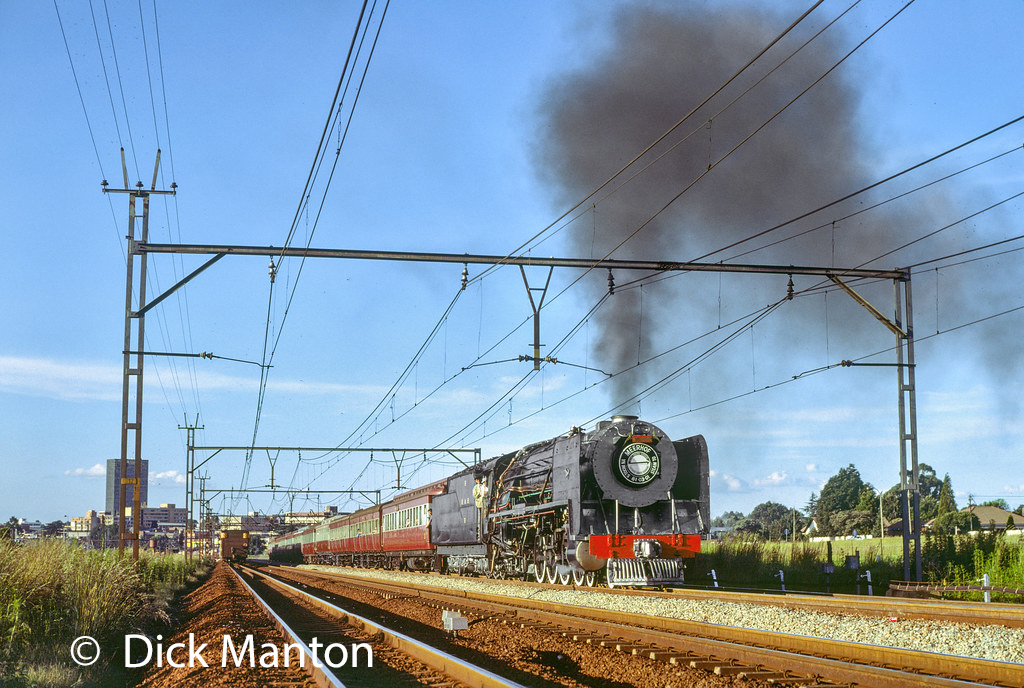
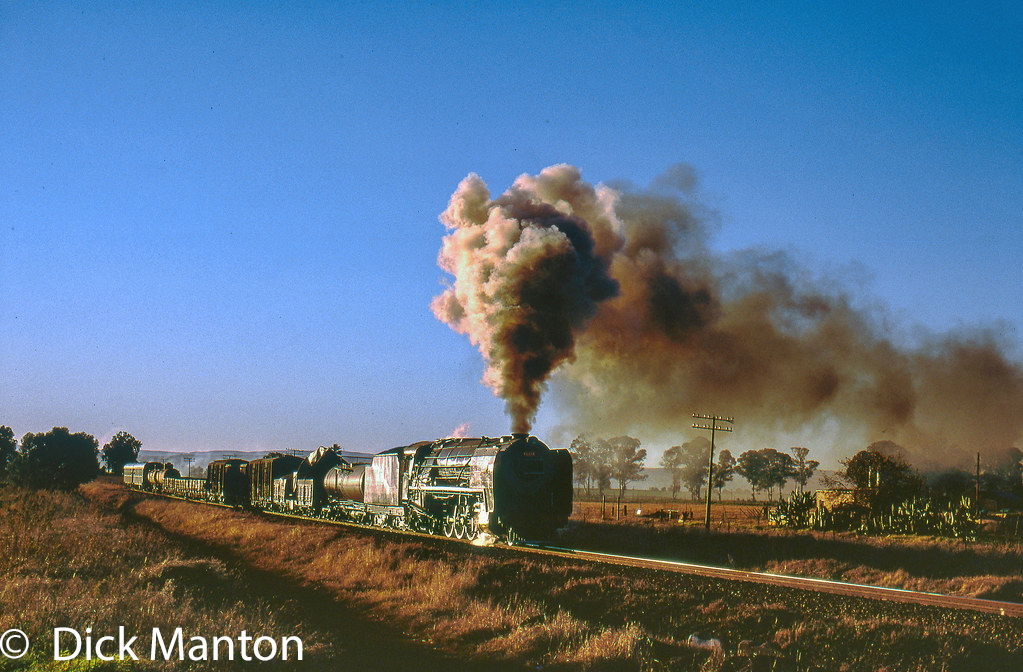
255 class 15F locomotives were delivered to the South African Railways between 1938 and 1948.
The first 21 were built in Germany in 1938. 7 (2902-2908) were built by Berliner Maschinenmau and fourteen (2909-2922) by Henschel and Son.
A further 44 (2923-2966) were built by the North British Locomotive Company (NBL) in Glasgow in 1938.
The Second World War interrupted locomotive deliveries but because there was a critical shortage of motive power manufacturing of the locomotives resumed to enable Beyer Peacock (BP) at Gorton, Manchester to manufacture and deliver 30 locomotives (2967-2996) in 1944.
In 1945, 60 (2997-3056) were built and delivered by NBL which was followed by a final batch 100 (3057-3156) from the same builder in 1946 and 1947.
The locomotives represented the ultimate stage in a long history of development spanning thirty years.
They were delivered with Watson Standard no. 3B boilers and a Watson cab.
Many serving locomotives were reboilered with these Watson Standard boilers and in the process most of them were also equipped with Watson cabs with their distinctive slanted fronts, compared to the conventional vertical fronts of their original cabs. To fit within the loading gauge the was domeless.
The pre-war locomotives were equipped with two large inclined Ross-pop safety valves, mounted on the upper sides of the boiler just ahead of the firebox and aimed about 80 degrees apart. When these inclined valves blew off under a station canopy, bystanders often received a shower of slimy wet soot. After the war, they were replaced by four smaller Ross-pop valves at the highest point of the boiler that blew off straight up
The pre-war locomotives were manually stoked and were delivered without smoke deflectors. The original 21 Berliner- and Henschel-built engines remained hand-fired for the full duration of their working lives. On the pre-war engines built by NBL provision was made in the design to later convert them to mechanical stoking. A mechanical stoker was tested on no. 2923 before the remaining locomotives of that group were all equipped with such stokers by the late 1940s. Their brake systems consisted of steam brakes on the engines and vacuum brakes on the tenders.
The post-war locomotives were built to the design and specifications of Dr M.M. Loubser, who succeeded Day as CME in 1939. His specifications included mechanical stokers, vacuum brakes on the coupled wheels as well as the tenders and elephant-ear smoke deflectors instead of smokebox handrails. Elephant ear smoke deflectors were later installed on the pre-war locomotives as well.
The engines from Beyer, Peacock were war-time austerity models on which planished steel boiler lagging was replaced by ordinary steel lagging, while cosmetic dressing items like stainless steel lagging bands, chrome-plated handrails and rounded corners on the front of the firebox lagging were absent or replaced by unplated items. While the boiler barrels of the pre-war engines were of nickel steel, the austerity locomotives had boiler barrels made of carbon steel with steel.
The locomotives in the final batch of 100 that were received from NBL in 1947 and 1948 were delivered with mechanical stokers already fitted.
Whilst the locomotives were predominantly used in the Orange Free State and Western Transvaal, they also saw service in every system country-wide, including Garratt territory in Natal where they were employed on the line from Newcastle to Utrecht.
On the Western Transvaal System, the class was for many years the mainstay of mainline steam at Germiston, working to Witbank, Volksrust and Kroonstad. In 1956 it was decided to temporarily allocate thirty class GMA Garratts to the Witbank-Germiston section during the transition period from steam to electric working. This released thirty class 15Fs for the Orange Free State, of which thirteen were required for increases in traffic and seventeen to replace locomotives redeployed to deal with increases in traffic on the Cape Northern System.
In February 1957, the Cape Midland System received its first two class 15F locomotives, transferred from the Cape Western System’s Paarden Eiland shed to Sydenham in Port Elizabeth. By July 1957 there were nine at Sydenham, three at Cradock and one at Noupoort. There was a brief period when both Systems were using class 15Fs on the mainline. On the Midland, several of the locomotives were equipped with chimney cowls from 1960 onwards to ease the smoke nuisance for footplatemen in the many tunnels, but these were of dubious effectiveness.
By late 1959, the fast Natal-bound passenger trains were worked from Germiston to Volksrust by diesel-electrics locomotives and the class 15F engines based at Volksrust were relegated to the lesser passenger train duties. By mid-1965, the Volksrust locomotives were transferred back to the Germiston shed upon completion of the electrification of the Natal mainline.
Class 15F also briefly served on the Cape Eastern system when some worked out of East London in the early 1960s.
In 1978, six of the locomotives (3000, 3031, 3066, 3072, 3094 and 3126) were hired by Rhodesia Railways, but they were returned nine months later and replaced by class GMAM Garratts.
In later years when the locomotives were employed on heavy shunting duties and local work many of the locomotives had their mechanical stokers removed.
Preservation
Given its usefulness and the large quantity placed in service with the SAR, there were many efforts to save a significant number at the end of the steam era. About 60 survived into the 21st century, most still owned by the THF. Many have been scrapped since then and further scrapping is anticipated, especially those stored at Millsite (Krugersdorp) which have been stripped by thieves. This is a list of what remains as of January 2019.
As well as the British built locomotives listed below there are seven locomotive preserved which were built in Germany.
- Berliner Maschinenmau – 2902 & 2908
- Henschel and Son – 2909, 2910, 2913, 2914 & 2916
- Beyer Peacock Works No 7091 – SAR 2976
- Beyer Peacock Works No 7100 – SAR 2985
- Beyer Peacock Works No 7109 – SAR 2994
- North British Locomotive Company Works No 24468 – SAR 2928
- North British Locomotive Company Works No 24469 – SAR 2929
- North British Locomotive Company Works No 24474 – SAR 2934
- North British Locomotive Company Works No 24476 – SAR 2936
- North British Locomotive Company Works No 24480 – SAR 2940
- North British Locomotive Company Works No 24498 – SAR 2958
- North British Locomotive Company Works No 25540 – SAR 3001
- North British Locomotive Company Works No 25546 – SAR 3007
- North British Locomotive Company Works No 25555 – SAR 3016
North British Locomotive Company Works No 25579 – SAR 3040
North British Locomotive Company Works No 25585 – SAR 3046 City of Bloemfontein
North British Locomotive Company Works No 25591 – SAR 3052 Brakpan
North British Locomotive Company Works No 25959 – SAR 3075
North British Locomotive Company Works No 25964 – SAR 3079
North British Locomotive Company Works No 25978 – SAR 3094
North British Locomotive Company Works No 25982 – SAR 3098
North British Locomotive Company Works No 25987 – SAR 3103
North British Locomotive Company Works No 26001 – SAR 3117
North British Locomotive Company Works No 26019 – SAR 3135
North British Locomotive Company Works No 26033 – SAR 3149
North British Locomotive Company Works No 26040 – SAR 3153
Back to Preserved Outside Britain – By Country
Back to Preserved Outside Britain – By Builder
Back to Preserved Outside Britain – South Africa
 Preserved British Steam Locomotives