| Length | 86ft 23⁄8 ins |
| Driving Wheels | 4ft 6ins |
| Boiler Pressure | 200psi Superheated |
| Cylinders | Outside – 21in x 26in |
| Tractive Effort | 31,850lbf |
| Valve Gear | Walschaert |
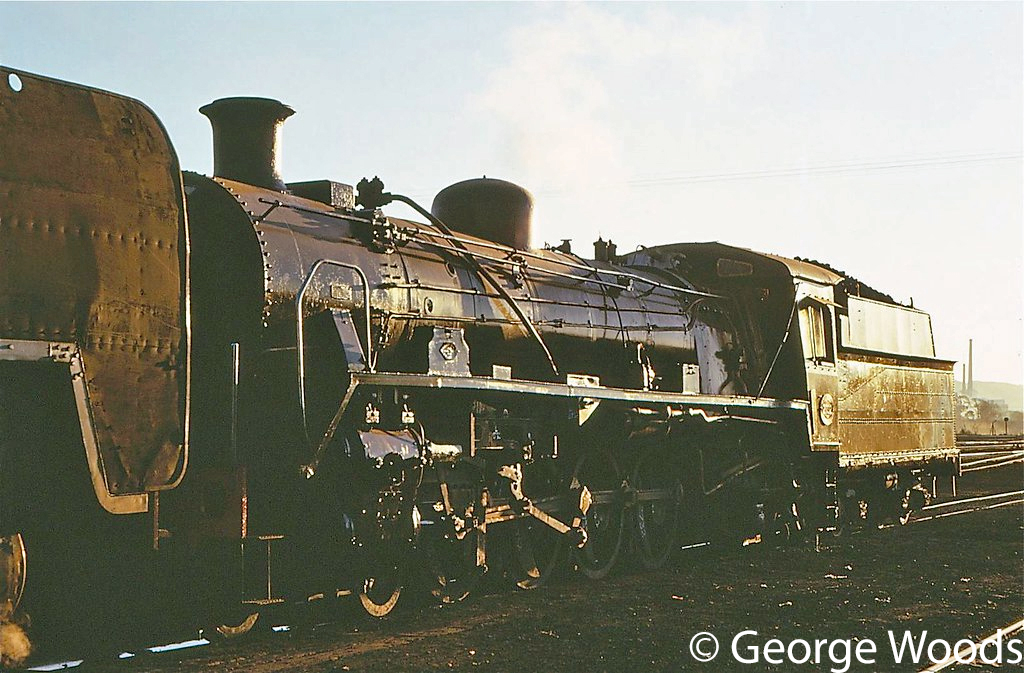
The class 19D 4-8-2 steam locomotive was the final development of the class 19 family of locomotives. The basic design of the class 19 was done in the late 1920s but the final development which resulted in the class 19D was undertaken by W A J Day who was CME at South African Railways from 1936 until 1939.
Between 1937 and 1949 235 class 19D locomotives entered service with the South African Railways. Between 1951 and 1955, 33 more were built for other operators like the Rhodesia and Angolan railways and the Nkana and Wankie mines, which makes the Class 19D the most numerous South African steam locomotive type ever built.
The first 40 locomotives were built in Germany in 1937 by Friedrich Krupp in Essen (2506 – 2525) and twenty by the Borsig Lokomotiv Werke in Hennigsdorf, Berlin (2526 – 2545).
A further 95 locomotives were ordered in 1938. 15 were manufactured by Škoda Works in Czechoslovakia (2626 – 2640), 40 by Friedrich Krupp in Essen (2641 – 2680) and 40 by Borsig Lokomotiv Werke in Hennigsdorf (2681 – 2720).
The Second World War interrupted the building of steam locomotives and in the post war years European suppliers were replaced by British ones. In 1947 55 locomotives were delivered by Robert Stephenson & Hawthorns (RSH) of Darlington (2721 – 2770). Number 2734 was lost at sea off the east coast of England and was replaced by RSH 7360 paid for insurance money
Locomotive building was interrupted by World War II and post-war locomotive procurement saw European suppliers being replaced by British ones. In 1947, the first fifty post-war Class 19D locomotives were delivered by Robert Stephenson & Hawthorns (RSH) of Darlington, England and numbered in the range from 2721 to 2770. Of this order, engine no. 2734, RSH works no. 7247, was lost at sea off the east coast of England. Its replacement with RSH 7360 was paid for by insurance and it was given the number of 2734 from the lost engine.
The final batch of 50 locomotives (3321 – 3370) was delivered in 1949 from the North British Locomotive Company (NBL) of Glasgow. These engines were delivered with type MX Torpedo tenders.
In 1951 the NBL built 6 locomotives for the Caminho de Ferro de Benguela (CFB) in Angola.
Between 1951 and 1953, Henschel & Son built 21 more for the Rhodesia Railways (RR) and the Nkana copper mine in Northern Rhodesia.
In 1955, four more were built by NBL for the Wankie coal mine in Southern Rhodesia.
The details above are for a North British Company built locomotive which were fitted with the MX tank wagon type tenders which had cylindrical water tanks and were known as Torpedo tenders. These tenders had larger water and coal capacity. The tenders attached to locomotives changed according to the duties the locomotive was assigned to.
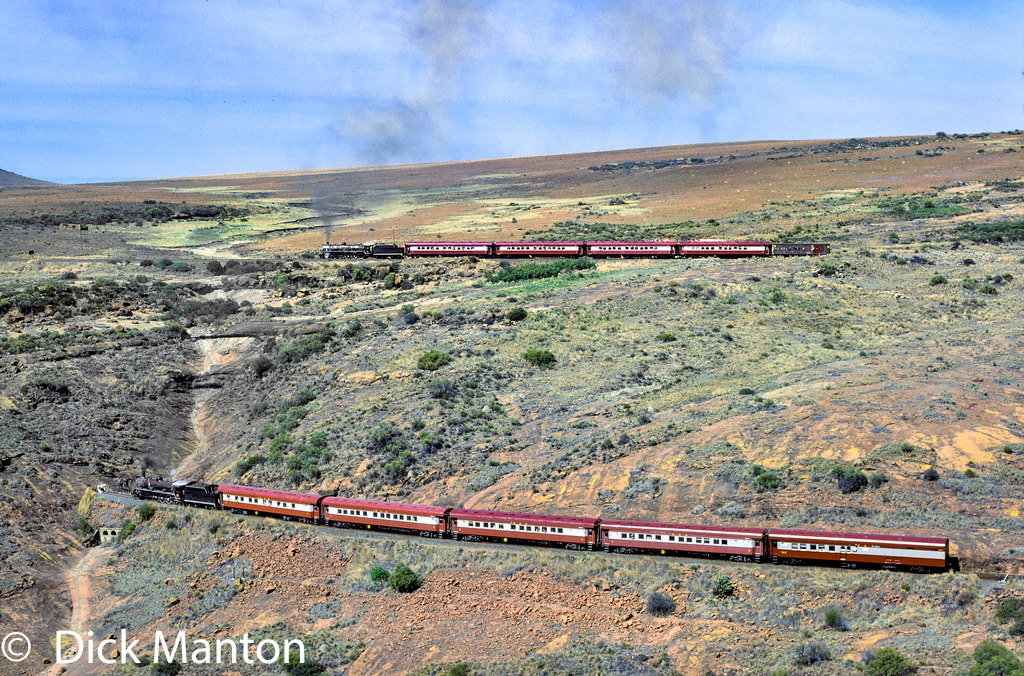
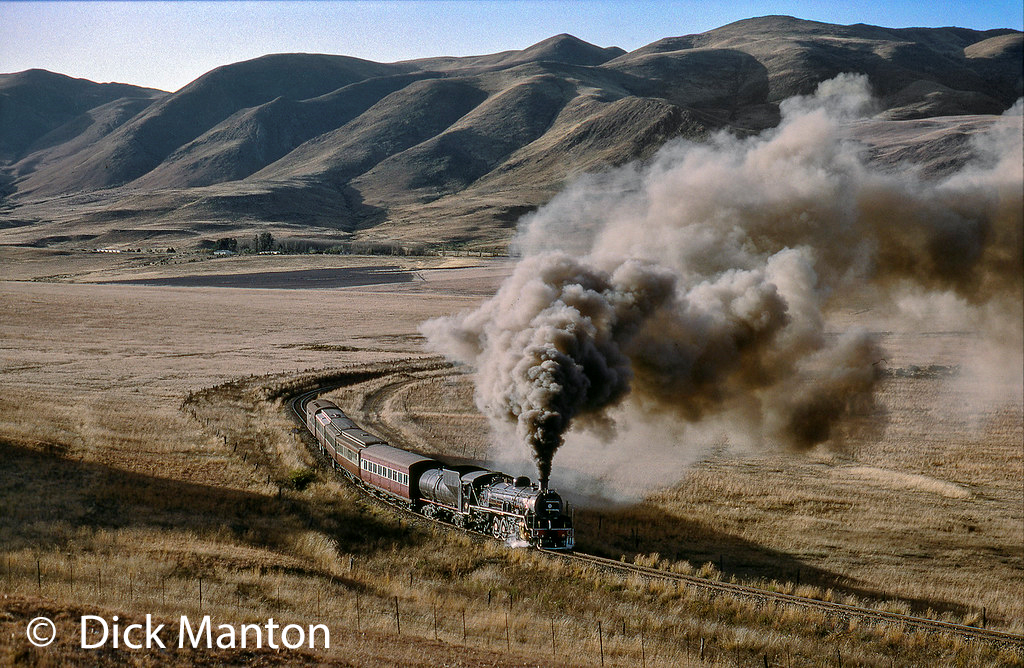
The class 19D was the most numerous South African branch line locomotive. It was a very versatile locomotive and was used on branch line and main line duties all over South Africa with the exception of the Western Cape, where class 19C locomotives were used.
Tasks varied from mainline local and international passenger trains on the section between Warrenton and Mafeking en route between South Africa and Northern Rhodesia via Bechuanaland and Southern Rhodesia, to secondary and branch line duties and in later years as shunting engines. Occasionally the South African locomotives worked through from Mafikeng in South Africa via Botswana all the way to Bulawayo in Zimbabwe. They were also hired out for shunting work to the Rhodesia Railways for use at Beit Bridge and to Mozambique for use at Lourenco Marques.
The class 19D locomotives served until right at the end of the South African steam era and were amongst the last steam locomotives to be replaced by electric and diesel-electric traction.
As they were being withdrawn from service a number of the class 19D locomotives were sold into industrial service. By the late 1980s, some of them were already at work at Dunn’s, Saiccor, Loraine Gold Mine and Bamangwato Concessions Ltd. (BCL) in Botswana, and more followed later.
Two of the locomotives (thought to be 2678 and 2689) which had been used at the Vaal Reefs Gold Mine in the 1980s until they were dumped at Jan Kempdorp. After being out in the open for about twenty years they were bought by BCL Selebi-Phikwe in 2011 to be overhauled and then used at the mine there. In June 2012 the first of these two was put into service. The mine closed in late 2016.
North British Locomotive Company Works No 26041 3321 Jessica
North British Locomotive Company Works No 26042 3322 Dominique
North British Locomotive Company Works No 26043 3323
North British Locomotive Company Works No 26044 3324
North British Locomotive Company Works No 26045 3325
North British Locomotive Company Works No 26047 3327
North British Locomotive Company Works No 26048 3328
North British Locomotive Company Works No 26050 3330
North British Locomotive Company Works No 26052 3332
North British Locomotive Company Works No 26054 3334
North British Locomotive Company Works No 26061 3341
North British Locomotive Company Works No 26065 3345
North British Locomotive Company Works No 26068 3348
North British Locomotive Company Works No 26070 3350
North British Locomotive Company Works No 26076 3356
North British Locomotive Company Works No 26080 3360
North British Locomotive Company Works No 26081 3361
North British Locomotive Company Works No 26084 3364
North British Locomotive Company Works No 26086 3366
Robert Stephenson & Hawthorns Works No 7280 2767

Back to Preserved Outside Britain – By Country
 Preserved British Steam Locomotives