| Weight | 80t 12cwt |
| Driving Wheels | 3ft 6¾ins |
| Boiler Pressure | 160psi |
| Cylinders | Outside – 17in x 23in |
| Tractive Effort | 18,660lbf |
| Valve Gear | Stephenson |
Details above are for the original locomotive as built.
The original Cape Government Railways (CGR) class 7 locomotive had been designed in 1892 by H.M. Beatty who was the Cape Government Railways (Western System) Locomotive Superintendent. 38 class 7 locomotives were placed in service by the Cape Government Railways between 1892 and 1893.
A second batch of 46 slightly improved locomotives were acquired between 1896 and 1901. Outwardly, all these locomotives appeared almost identical to the first batch but they had increased heating capacity as well as some other modifications. They were the first to be equipped with type ZC tenders, which rode on two two-axle bogies and had a capacity of 5 long tons 10 hundredweight of coal and 2,600 imperial gallons of water.
In 1896 the Cape Government Railways placed orders for 28 locomotives, distributed between three manufacturers.
- Sharp, Stewart and Company built eight for the Midland System, numbered in the range from 385 to 392.
- Dübs and Company built eight for the Eastern System, numbered in the range from 718 to 723, 740 and 741.
- Neilson and Company built six for the Midland System, numbered in the range from 393 to 398, and another six for the Eastern System, numbered in the range from 724 to 729.
In 1897, a further four locomotives were ordered by the CGR from Neilson, for use on the new Vryburg to Bulawayo line of the fledgling Bechuanaland Railway Company (BR). The line was still under construction and was operated by the CGR on behalf of the BR at the time. These locomotives, numbered in the range from BR4 to BR7, were eventually returned to the CGR and renumbered in the range from 347 to 350 for the Midland System.
In 1897 and 1898, Neilson also built eight locomotives for the Sudan Military Railway, where they were known as the Dongola class. In March 1896 Anglo-Egyptian forces under Kitchener began their reconquest of Sudan from the Mahdist State. To help supply and transport the troops involved, Kitchener ordered the construction of a railway two railways. The first ran parallel to the Nile River for nearly 200 miles from Wadi Halfa to the Third Cataract at Kerma The second line was from Wadi Halfa across 571 miles through the Nubian Desert to Atbarah and on to Khartoum to the south. The planned railhead, the town of Abu Hamed, was seized by the Anglo-Egyptians in August 1897, allowing for the completion of the railway in October.
The locomotives for Sudan were equipped with gates across the open ends of their cabs and pipes under the running board on the right side, which terminated in hose connections below the front buffer beam, so that water tenders could be coupled to the front and they could be run cab forward. The reason was that they were used on a single line which was still being constructed into the desert from Wadi Halfa and which initially had no water supply at the far end. For some reason, these locomotives were not popular in the Sudan and they were all withdrawn from service by 1914.
In 1898, another ten locomotives were taken into service by the CGR, as well as another three by the Imvani-Indwe Railway which operated a branch line from Sterkstroom to the Indwe Collieries in the Eastern Cape.
- Sharp Stewart built one locomotive for the Imvani-Indwe, which was named E.J. Byrne by the colliery. It was eventually taken into the CGR stock and became the Eastern System’s no. 742.
- Dübs built two for the Imvani-Indwe, which were named Bradfield and Gardner Williams. They were also eventually taken into the CGR stock and became the Eastern System’s numbers 743 and 744 respectively.
- Dübs also built ten for the CGR, which were numbered in the range from 730 to 739 on the Eastern System.
In 1901 one more locomotive was delivered by Dübs which became the Eastern System’s no. 758.
When the Union of South Africa was established on 31 May 1910, the three Colonial government railways (CGR, Natal Government Railways and Central South African Railways) were united under a single administration to control and administer the railways, ports and harbours of the Union. Although the South African Railways and Harbours came into existence in 1910, the actual classification and renumbering of all the rolling stock of the three constituent railways were only implemented with effect from 1 January 1912.
When all but two of these 46 locomotives were assimilated into the South African Railways (SAR) in 1912, they were renumbered in the range from 988 to 1031 and designated class 7A. The two exceptions had been sold to Pauling and Company in 1909.
The rest of the CGR’s class 7 locomotives, together with class 7 locomotives from the Central South African Railways (CSAR), the Pretoria-Pietersburg Railway (PPR), the Rhodesia Railways (RR), the Natal Government Railways (NGR) and, in 1925, the New Cape Central Railways (NCCR), were grouped into six different sub-classes by the SAR and designated classes 7 and 7B to 7F.
During the 1930s and later, many of the class 7 series locomotives were equipped with superheated boilers and piston valves. On the class 7B and class 7C, this conversion was sometimes indicated with an S suffix to the class number on the locomotive’s number plates, but on the rest of the class 7 family this distinction was rarely applied. The superheated versions could be visually identified by the position of the chimney on the smokebox, the chimney having been displaced forward to provide space behind it in the smokebox for the superheater header.
In the early 1960s, class 7A number 1021 was reportedly equipped with a superheater and reclassified to the sole class 7AS. This locomotive spent its last working days on the SAR doing steam heating tests on mainline passenger coaches at the Braamfontein North passenger yard in Johannesburg, before being sold to the Zambesi Saw Mills (ZSM) in 1971. The ZSM engineer’s records, however, show it as not superheated and having saturated boiler.
During their long service lives, some of the class 7A locomotives carried more than one numbering.
- Five (C522, C523 & C525-C527 later SAR 999, 1018, 989, 1010 & 1006 respectively) saw service with the Imperial Military Railways (IMR) during the Second Boer War and were temporarily renumbered accordingly.
- Three (SAR 1028-1030) were unnumbered, but named, while in Imvani-Indwe colliery service and all but two were eventually renumbered into the SAR stock in 1912.
- When the four Bechuanaland Railway Company locomotives, numbers BR 4 to BR 7, were eventually returned to CGR service and renumbered in the range from 347 to 350 for the Midland System, it resulted in number duplication which confused historians in later years. These four engine numbers had been used previously on four of the 1892 and 1893 batch of class 7 locomotives, also built by Neilson, which had since been renumbered in the range from 712 to 715 when they were transferred from the Midland to the Eastern System.
The class 7 series became the main goods locomotive class for the last twenty years of the existence of the CGR. In SAR service, the class 7 series worked on every system in the country. Of this second batch of the class, not all began their service lives on the CGR, and not all remained with the CGR until the SAR came into existence. In summary:
- Four originally began their service lives on the BR, between Vryburg in the Cape Colony and Bulawayo in Southern Rhodesia, and were eventually returned to the CGR and renumbered 347 to 350 for the Cape Midland.
- Four from the 1896 and one from the 1898 batches saw service with the IMR during the Second Boer War from 1899 to 1902, having been allocated to the IMR for the duration of the war.
- Two locomotives, numbers 348 and 398, were sold to Pauling and Company in 1909, for use during the construction of the Rhodesia Katanga Junction Railway (RKJR) in Northern Rhodesia. The RKJR purchased them from Paulings in 1910, after which they went to the Mashonaland Railway Company in 1928, and eventually to the Rhodesia Railways (RR) in 1936. They retained their CGR engine numbers for their entire working lives, until they were scrapped by the RR in 1938.
- The Imvani-Indwe Railway’s three 7th Class engines were taken into the CGR stock and numbered 742 to 744 for service on the Eastern System, before the 1912 amalgamation into the SAR.
In 1915, shortly after the outbreak of the First World War, the German South West Africa colony was occupied by the Union Defence Forces. Since a large part of the territory’s railway infrastructure and rolling stock was destroyed or damaged by retreating German forces, an urgent need arose for locomotives for use on the Cape gauge lines in that territory. In 1917, numbers 1000 to 1002, 1005, 1006, 1017, 1019 and 1021-1024 were transferred to the Defence Department for service in South West Africa.
These eleven locomotives remained in South West Africa after the war. They proved to be so successful in that territory, that more were gradually transferred there in later years. By 1949 53 locomotives of the class 7 family were still in use there. Most remained there until 1961 when they were replaced by diesel-electric locomotives. The class 7 engines were then transferred back to South Africa.
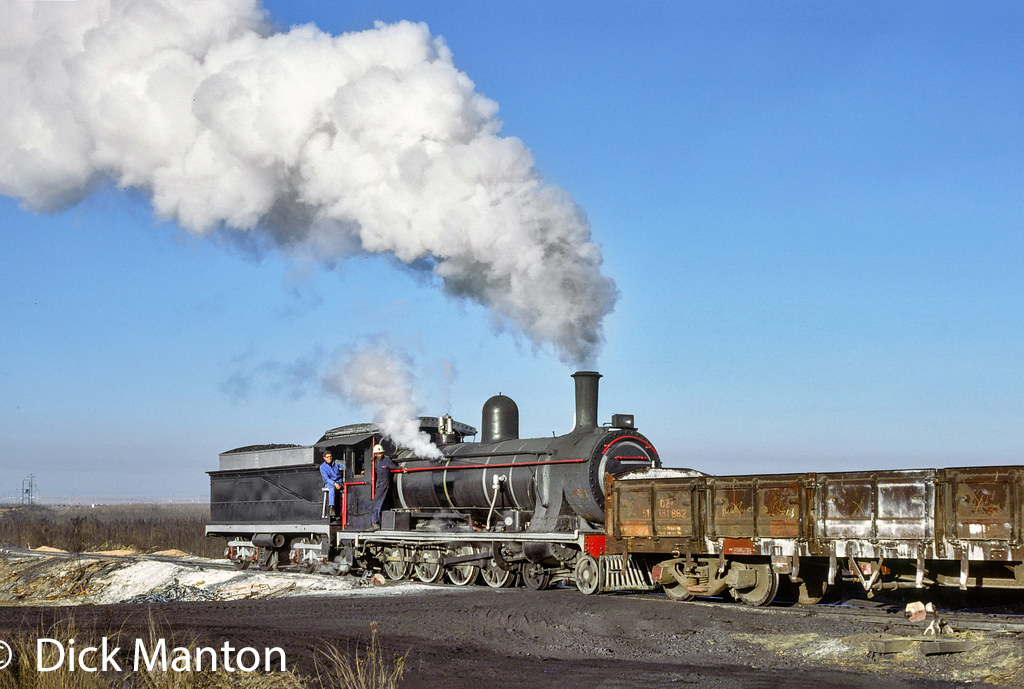
In South Africa, they remained in branchline service until they were finally withdrawn in 1972.
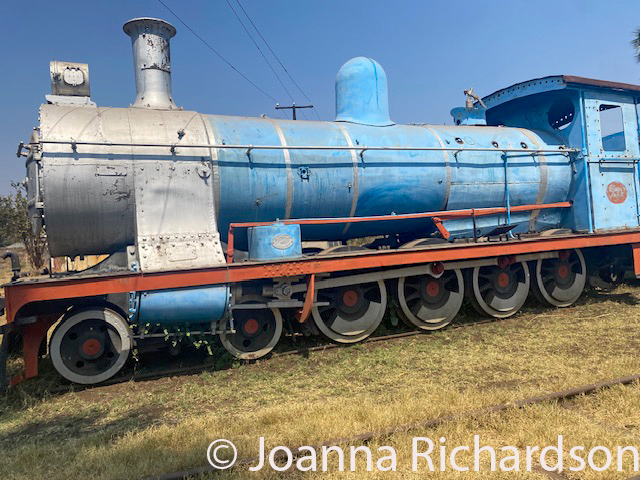
Four class 7A locomotives, numbers 992 and 1006 in 1966, and 993 and 1021 in 1971, as well as two class 7 and two class 7B locomotives were sold to the Zambesi Saw Mills (ZSM) in Zambia. The company worked the teak forests which stretched 100 miles to the north-west of Livingstone, where it built one of the longest logging railways in the world to serve its sawmill at Mulobezi.
Railway operations ceased at Mulobezi around 1972 and operation of the line to Livingstone was taken over by the Zambia Railways in 1973. While most of the class 7 series locomotives remained at Mulobezi out of use, class 7A number 1021 was installed at the Livingstone factory to supply steam for curing wood.
Preservation
Dübs and Company Works No 3641 – CGR 743, Imvani-Indwe Railway Bradfield & SAR 1029
Dübs and Company Works No 3644 – CGR 731 & SAR 1019
Neilson & Co Works No 4926 – CGR 724 & SAR 1007
Neilson & Co Works No 4928 – CGR 726 & SAR 1009
Neilson & Co Works No 4930 – CGR 728 & SAR 1011
Sharp Stewart & Co Works No 4150 – CGR 390 & SAR 993
Back to Preserved Outside Britain – By Country
 Preserved British Steam Locomotives