| Introduced | 1877 – 1882 |
| Driving Wheels | 5ft 6ins |
| Boiler Pressure | 130psi but 140psi later |
| Cylinders | Outside – 18in x 24in |
This locomotive was built by Dübs and Company in Glasgow in 1879 for the New South Wales Government Railway in Australia. 30 were supplied by Beyer Peacock between 1877 and 1879 and a further four in 1881. 26 were built by Dübs and Company during 1880 and 1881 and 8 were built in Australia by the Atlas Engineering Works situated in Sydney and delivered in 1881 and 1882. In total 68 locomotives were supplied.
This locomotive entered service as C 145 in March 1880.
The locomotive design is a development of the London Metropolitan Railway class A 4-4-0T locomotive built by Beyer Peacock and first used in 1864. One of these locomotives (Metropolitan Railway No 23) is preserved in Britain at the London Transport Museum.
The first batch of locomotives supplied by Beyer Peacock were placed in service as class 79 locomotives. They were the first locomotives to be imported with Westinghouse continuous air-brakes already fitted.
They were employed hauling express passenger and mail trains.
In 1895 one of the class was converted to a 4-4-2T tank engine for use on the Sydney suburban services. In 1902 a further 19 were converted to 4-4-2T tank engines and became CC79 class locomotives. The remaining 4-4-0 tender engines were then classed as C80.
With the arrival of newer locomotives, the class C80 engines were relegated to hauling secondary and later branch line services radiating out of Dubbo, Werris Creek, Narrabri and Moree, where some were equipped with cowcatchers for operation on unfenced lines.
In 1924 the locomotive class was changed to Z12 and at the same time the number the locomotive carried was changed from 145 to 1219.
The remaining 4-4-2 tender engines were then classed as C80 which was later changed to Z12.
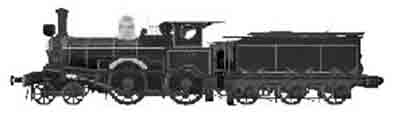
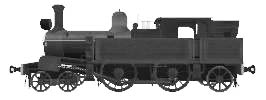
An operational problem experienced with the class was accumulation of ash in the smokebox, resulting in blockage of the lower fire tubes, reduced steaming and charring / deformation of the smokebox door. This locomotive is unusual as the only class member modified in general service to overcome this problem, with a “drumhead” extended smokebox fitted at Eveleigh Workshops in February 1956.
Following the overhaul in 1956 the locomotive was based at Werris Creek to work the school train to Tamworth and back. Later that year it was transferred to Moree for the Moree-Inverell tri-weekly passenger service.
In September 1958 it was transferred to Casino for use as a stationary boiler.
In September 1958 1219 was transferred to Casino for use as a stationary boiler until requisitioned in January 1962 as a stand-by locomotive on Vintage Train operations based in Sydney. It was nursed through these duties until it was withdrawn from service in November 1963 owing to poor boiler and mechanical condition. The locomotive was condemned two years later having covered over 1.3 million miles whilst in service.
The locomotive was earmarked for preservation by the Museum of Applied Arts & Sciences (now known as the Powerhouse Museum). It was initially stored at Enfield with the New South Wales Rail Transport Museum (NSWRTM) collection. It was then transferred to Thirlmere in 1975.
By this time it showed the effects of many years of open storage, with significant surface rust and the timber cab roof heavily decayed and the locomotive was shunted into a siding away from public view.
The locomotive was given some preventative care whilst in storage – it was black-oiled in 1989 and some repainting applied in the mid 1990’s. It was moved into covered storage at Thirlmere in late 2004 before being rail hauled to Broadmeadow Depot in August 2008, where it is now in secure undercover storage on one of the roundhouse roads.
Two other locomotives are preserved as Z12 locomotives
- 1210 built by Beyer Peacock in 1878 as works number 1767
- 1243 built in 1882 by Atlas Engineering Company in Australia
Three are preserved as rebuilt Z13 locomotives
- 1301 built by Beyer Peacock in 1877 as works number 1624
- 1307 built by Beyer Peacock in 1877 as works number 1637
- 1308 built by Beyer Peacock in 1877 as works number 1620
This is one of two locomotives build by Dübs and Company in Glasgow for the Queensland Government Railway which entered service in February 1881. They were designated the 4D9 class. The 9 denoted the cylinder size which was 9in by 15in.
Both locomotives were initially deployed at Bundaberg on light duties but were found to be underpowered.
In August 1894 the locomotive was sold to Colonial Sugar Refining Company Chlders Mill. The mill closed in 1932.
The locomotive was later sold to the Public Works Department in Tasmania to work on the remote Macquarie Harbour near Straham where it was used to help with the construction of a breakwater.
In May 1941the locomotive was sold purchased by R Howard at Zeehan who owned sawmills.
The locomotive then spent in store in the station yard at Hobart.
The locomotive was then acquired by the Don River Railway and moved to their museum and workshop at Don near Devonport. It was then placed on static display although it is missing some components.
Back to Preserved Outside Britain – By Country
 Preserved British Steam Locomotives