| Weight – Locomotive | 63t 0cwt |
| Tender | 42t 4cwt |
| Driving Wheels | 4ft 3ins |
| Boiler Pressure | 160psi |
| Cylinders | Outside – 21in x 26in |
| Tractive Effort | 30,576lbf |
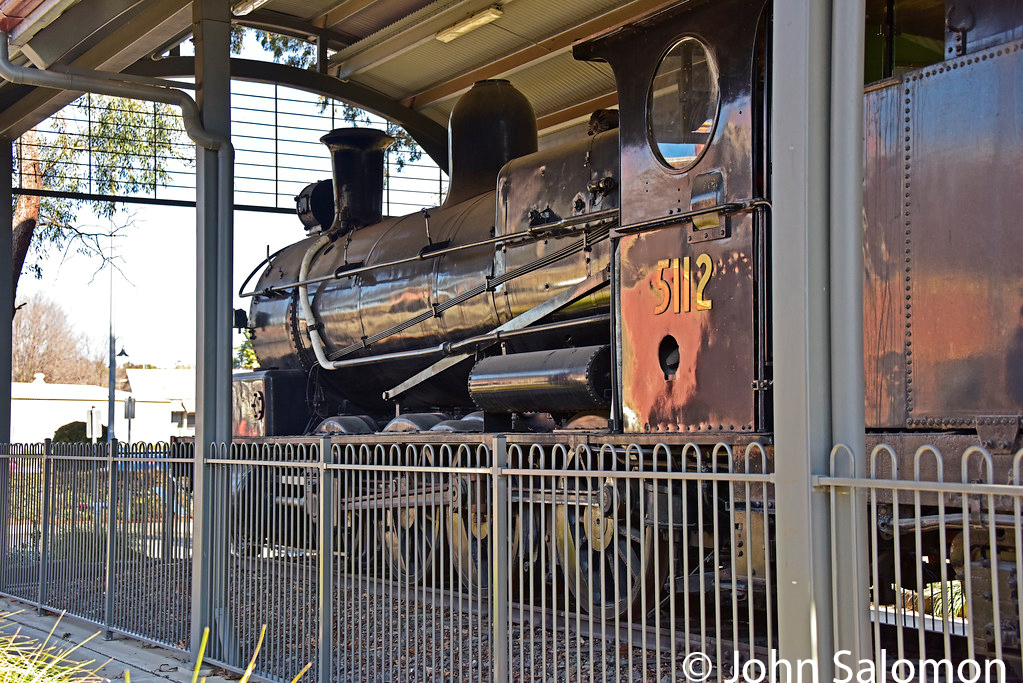
This locomotive was built in 1908 by Beyer Peacock in Manchester for the New South Wales Government Railway (NSWGR).
This very successful type was one of the three standard classes designed by NSWGR Chief Mechanical Engineer William Thow in conjunction with Beyer Peacock & Co. The choice of wheel configuration followed earlier NSWGR experience with 2-8-0 locomotives built by Baldwin in the USA for heavy freight duties. The 2-8-0 wheel arrangement had been developed by Baldwin for heavily-graded mountain railways in Colorado.
The T(524) class which the engine became part of were the most numerous class of locomotives in Australia with 280 being delivered to the NSWGR between 1896 and 1916. Of the 280 151 were built by Beyer Peacock, 84 by the North British Locomotive Company 10 by Neilson & Co, 5 by Dübs & Co and 30 by Clyde Engineering in Australia.
The T(524) class were reclassified as D 50 in the NSWGR renumbering scheme of 1924.
The final 75 locomotives delivered were fitted with superheaters as part of the developments made over the delivery period. Many of the earlier saturated engine were progressively converted to superheating and these could be easily identified by their extended smokeboxes. Works number 5054 was not one fitted with a superheater but it was equipped with a Lird crosshead which was unusual for this class.
10 superheated locomotives built by the North British Locomotive Company never made it to Australia as they were requisitioned by the British Army’s Royal Engineers Railway Operating Division (ROD) for service in Europe during the First World War and most ended up in Belgium.
By the middle of 1964 only 113 of the 280 remained in service and they were normally restricted to hauling coal trains in the Hunter Valley and shunting duties at larger marshalling yards.
The locomotive was withdrawn from service in April 1974 but was retained for preservation on the basis that it had been regularly assigned to former Prime Minister Ben Chifley during the period that he was a locomotive driver in the Bathurst area.
During the late 1980’s a group formed with the aim of overhauling the locomotive for tourist and enthusiast operations around the NSW central-west. It was relocated to the old Orange East Fork Locomotive Depot and work began, however the project lost momentum as the volunteer group struggled to find funds for unbudgeted mechanical work. The locomotive remained partially dismantled at Orange for many years until the overhaul project ultimately failed. It eventually returned to Bathurst for storage in a council depot.
In July 2005 the engine was moved to the State Mine Heritage Park & Museum at Lithgow for assessment for restoration to either static or operational condition. It later moved to Branxton for static restoration, completed by the Hunter Valley Railway Trust as a project funded by Bathurst Council. The restoration was completed in early 2010 and the locomotive finally returned to Bathurst around October 2010 where it was placed on static display outside the station. A substantial weather roof was subsequently built to protect the locomotive.
Two other members of the class built by Beyer Peacock are preserved.
- 5069 – Works number 4374 built in 1902
- 5132 – Works number 5074 built in 1909
There is also one other locomotive preserved which was built by Clyde Engineering in Australia.
- 5096 – Works number 1 built in 1907
 Preserved British Steam Locomotives