| Weight | 34t |
| Driving Wheels | 2ft 7½ins |
| Boiler Pressure | 195psi |
| Cylinders | Outside – 14½in x 20in |
| Tractive Effort | 12,507lbf |
| Valve Gear | Walschaerts |
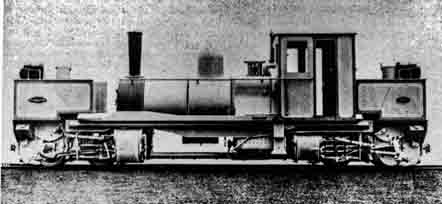
This locomotive is one of two built by Beyer Peacock at Gorton in Manchester in 1909 for the Tasmanian Government Railways. They were the first Garratt articulated locomotives to be built but did differ in two important details from Herbert Garratt’s original concept. First: they are compound locomotives, with two high-pressure cylinders on the rear engine, and a pipe leading to two larger low-pressure cylinders on the front engine; second: both sets of cylinders were placed facing each other inside their engine units, rather than facing out as in all other Garratts. This was a problem on the rare warm days on the West Coast Range in Tasmania, as one pair of cylinders was under the cab, making the cab uncomfortably hot.
The locomotives were employed on the North East Dundas Tramway which crossed some of the most rugged terrain in the world served by a railway at the time. It featured long stretches of 1-in-25 grades, high trestle bridges and 30-metre-radius reverse curves.
After the line closed in 1929, the boiler of K1 was sold to a sawmill.
After lying in storage at Zeehan, Tasmania from around 1939 the locomotive was sold back to Beyer Peacock in 1947 together with the boiler cradle from the second locomotive (K2) and taken back to England.
Beyer Peacock closed in 1966 and the locomotive was sold to the Ffestiniog Railway in Wales for £1,500.
The locomotive was too tall and wide for use on the restricted loading gauge of the Ffestiniog Railway and after being stored for ten years at Portmadog it was lent to the National Railway Museum at York where it was cosmetically restored.
In 1995 the locomotive moved to the Welsh Highland Railway (WHR) where it was restored and converted to oil burning. It steamed again in 2004 and in 2006 it was certified to haul passenger trains on the WHR.
In August 2007 the locomotive was converted back to burning coal and it entered regular passenger service in October 2007.
The boiler certificate expired in 2014 and the locomotive was withdrawn from service for an overhaul.
In 2019 the locomotive moved to the Statfold Barns Railway for a period of ten years. The overhaul of the locomotive was completed in 2020.
 Preserved British Steam Locomotives